Cellular Licenses Infographic – Solo Build

Rebuilt – Link to Artifact
Original – Link to Artifact

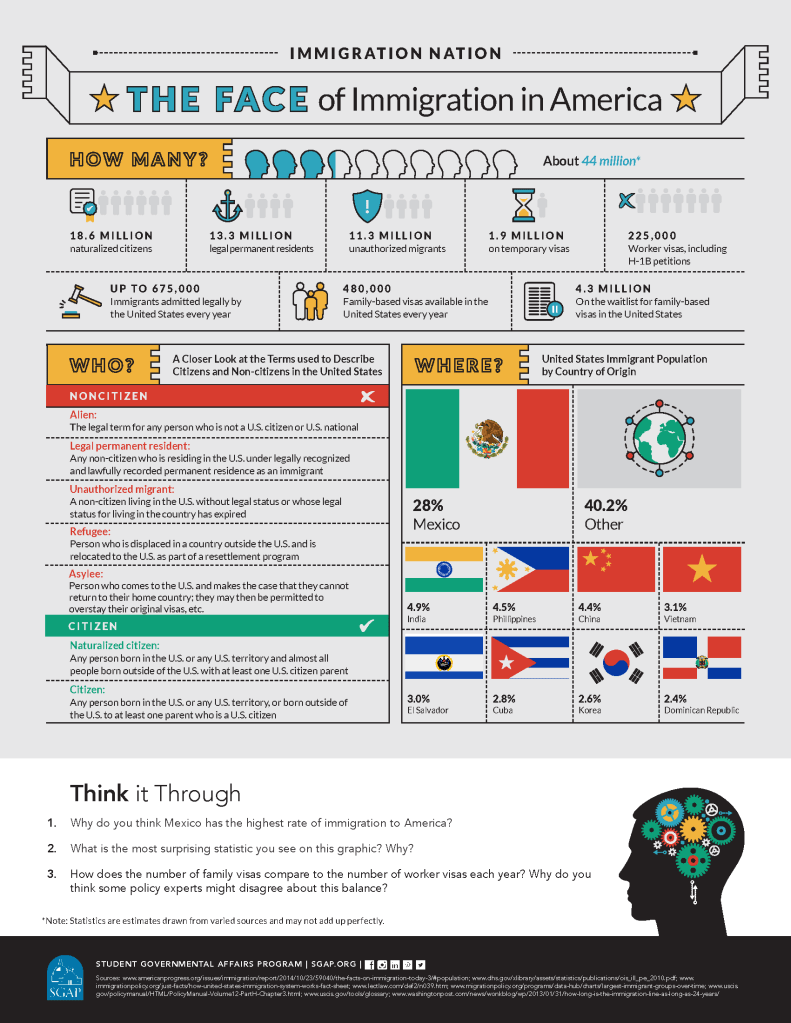
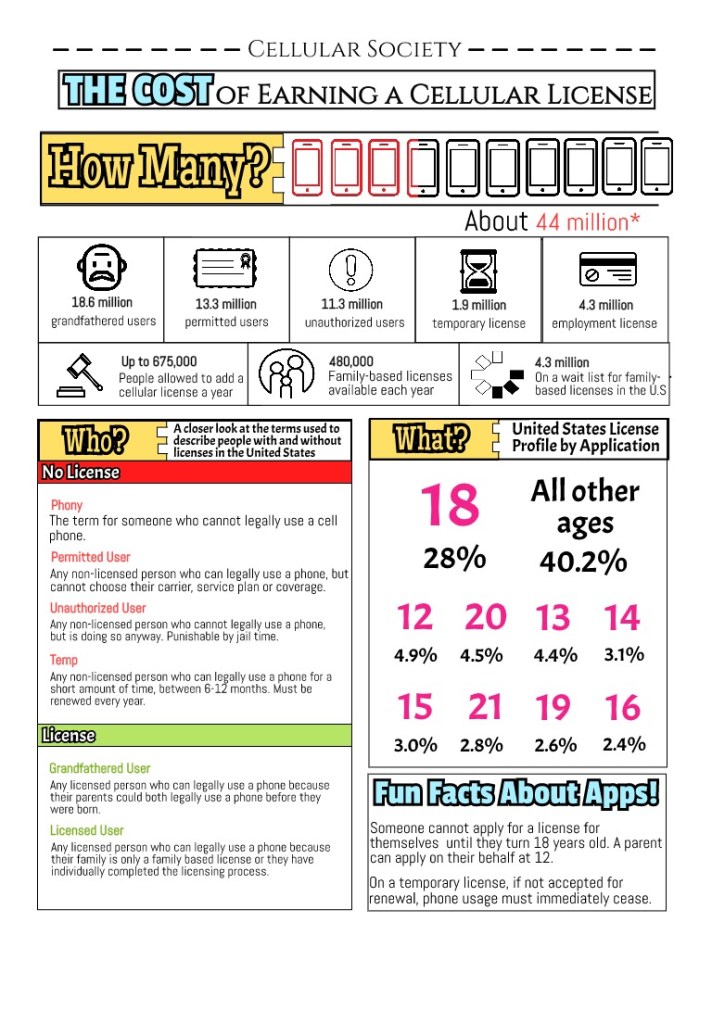
Taking inspiration from an infographic about immigration in the United States, I recreated what it would look like with similar percentages and styles but changed the theme: What if there were only a certain number of cellular licenses given a year and you HAD to have one to use a cell phone?

While an exact correlation is difficult for me to think of (let me know if you think of a way!), I believe that students would be more likely to care about something that affects them. Immigration is not something every students is going to deal with or even understand why it’s a problem. This whole design was born from the outlook of “But I live here, so why do I care who else can get in?” or “I already live here, not my problem“. It is a fairly selfish (see: teenager) attitude and although I only observe it at my school anecdotally, I still see the need to make it ‘real’ enough that a kid would care about it long enough to think about it, or, at the very least, truly understand how and why the system works the way it does.

Edit: An earlier link to my artifact had a few errors.

Choose Your Own Warmup

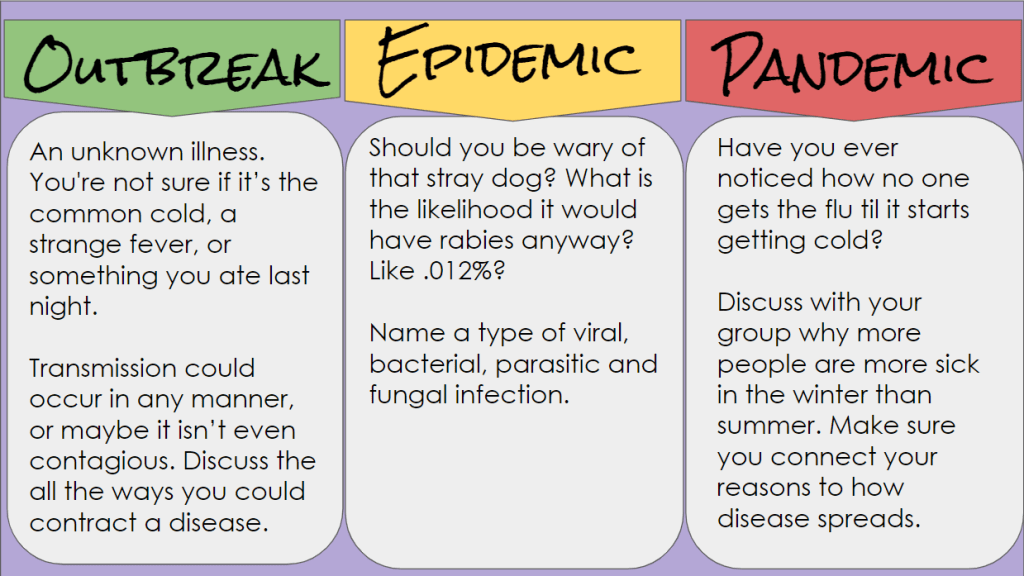
A variation of a part of the TextQuest, I took the concept that would be used in a language arts class for exploring character motivations and made it a discussion on important concepts in a disease chapter for 8th grade science. Students get in groups of 2-4 and choose a question. There is also a game element to choosing a harder question, gaining more minimum points for a right answer, but also risking more by have a smaller chance to get additional points! Check it out here, three warm-ups with the ability to keep consecutive track of scores across teams!

Low-Tech Social Network (Remake)

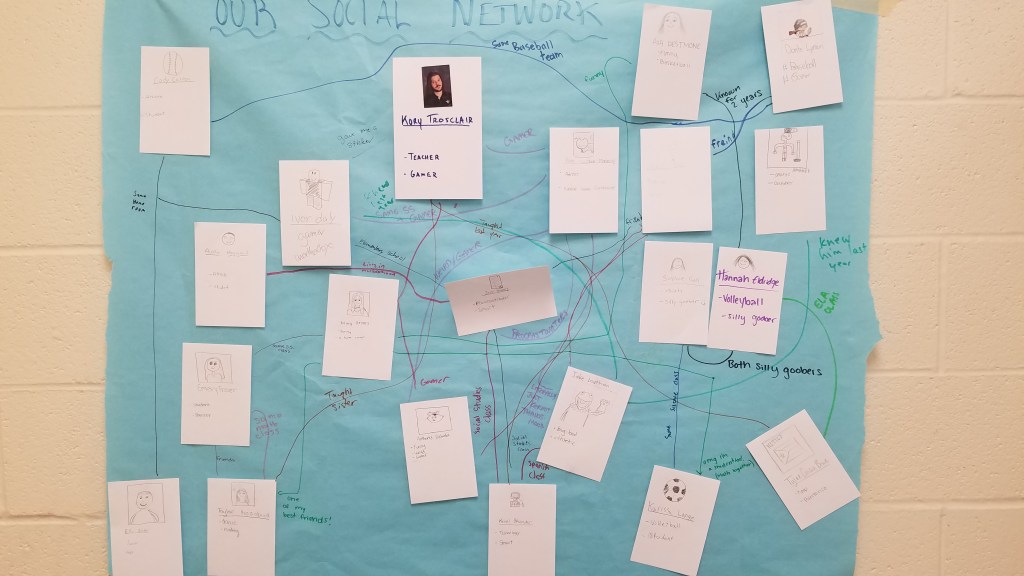
Need quick activity to get your new class to get to know each other than isn’t horribly awkward? Try a low-tech social network! I am not sure if the link is the originator or not, but this activity is a great, quick ice breaker. Start by using yourself as an example, put your name, and some ‘tags’ that describe you. Ask students what links you share together (both go to same school, live in same area). Then have students make their own cards and list some tags. As students place their card on the social network, they have to draw ‘x’ number of connections (how ever many you want!) Really make them think by removing easy connections like, ‘We share this class together’ or ‘You teach both of us’. Kids will be engaged and learn connections they didn’t know they had! My example is below and was used for a Leader in Me activity.

Butcher paper or the large colored classroom paper is nice, but not required! Use part of your board if necessary or put them on the wall with string and index cards connecting each one! Make it massive if you want, on a media center wall perhaps, including your whole schools network!

Bartle’s Taxonomy of Player Types – Solo Build

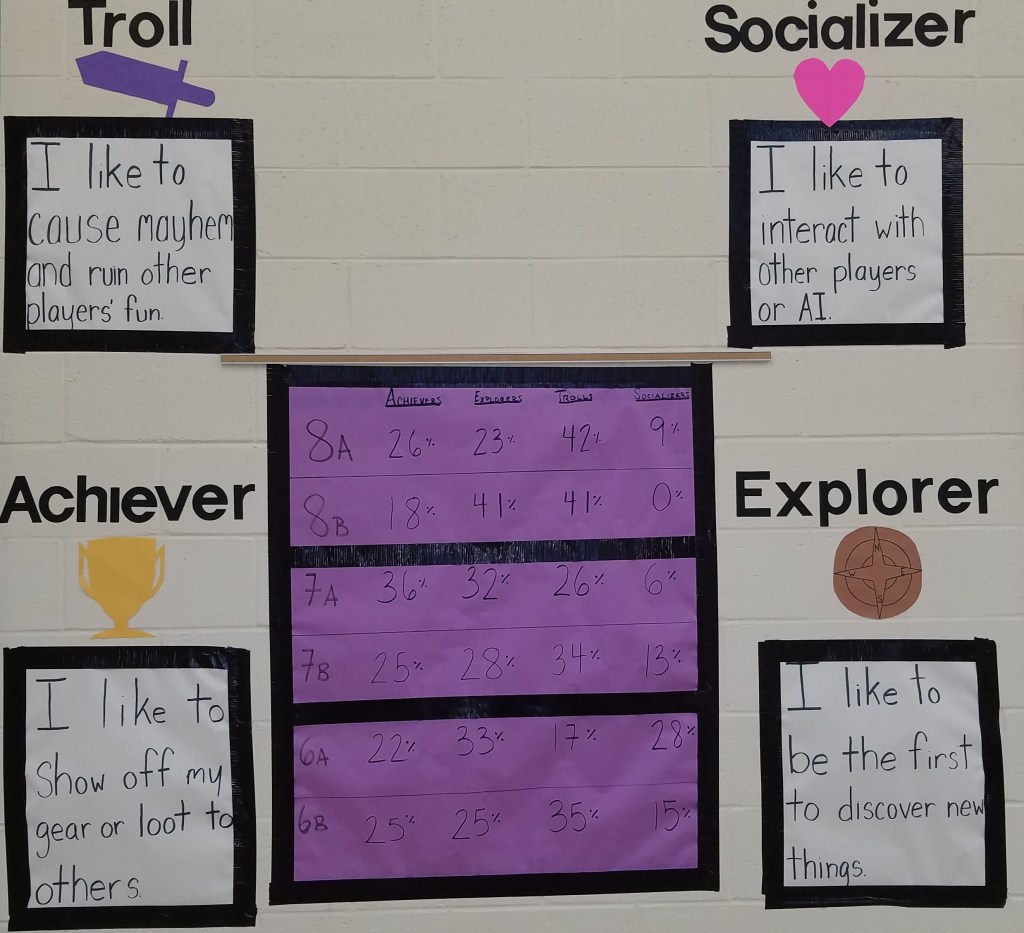
All the way from the forgotten year of 1996 is Dr. Richard Bartle and his classification of video game players (or people who do something virtually). If you don’t want to get real deep into all that, it’s basically a dichotomous chart that places you into categories by percentage in regards to what you like to spend your online time doing. I personally believe that this applies to most online interactions now and not just games and Dr. Bartle was well ahead of his time.

For the purpose of this data aggregation, I changed his term ‘Killer’ to ‘Troll’ for parent reasons and because it seems more applicable to the youth I teach. This idea to use this quiz was originally pulled from John Meehan and I took it a step by making a giant wall chart of my classes and an explanation of what each entails to the interested passerby. I used black duct tape, a hot glue gun, the Elison machine and some scissors to make it happen.

Looking at this picture now, I think I’ll add the BARTLE TAXONOMY OF PLAYER TYPES in big cutout, capital letters in the blank area to tie it all together!

March Sadness (Remake) – Solo Build

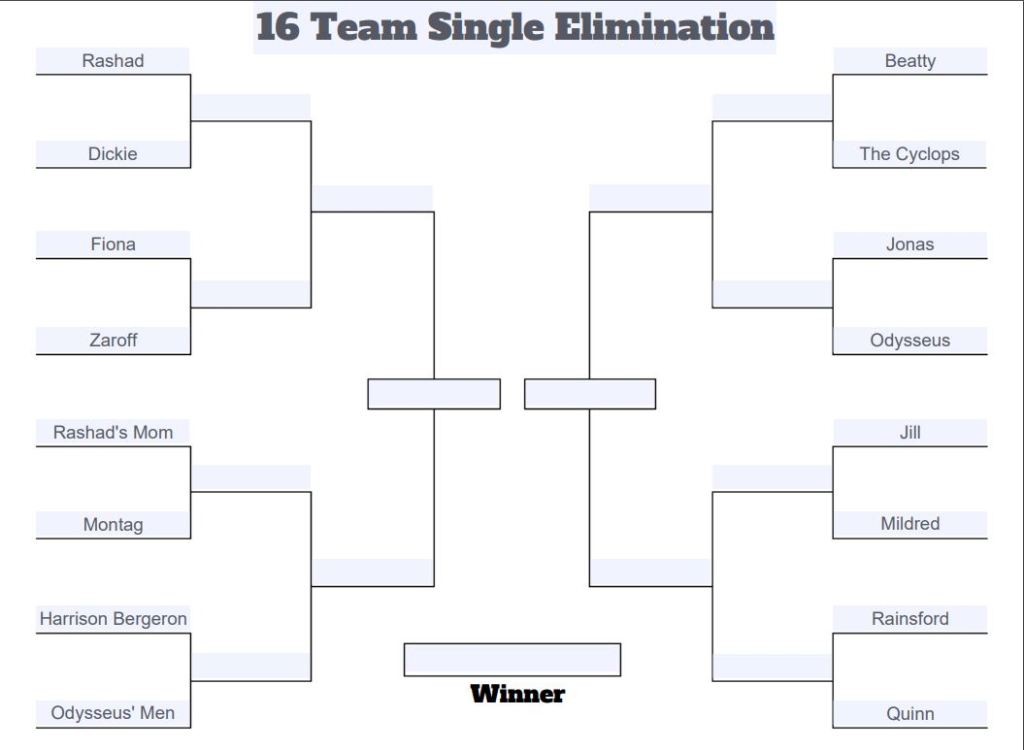
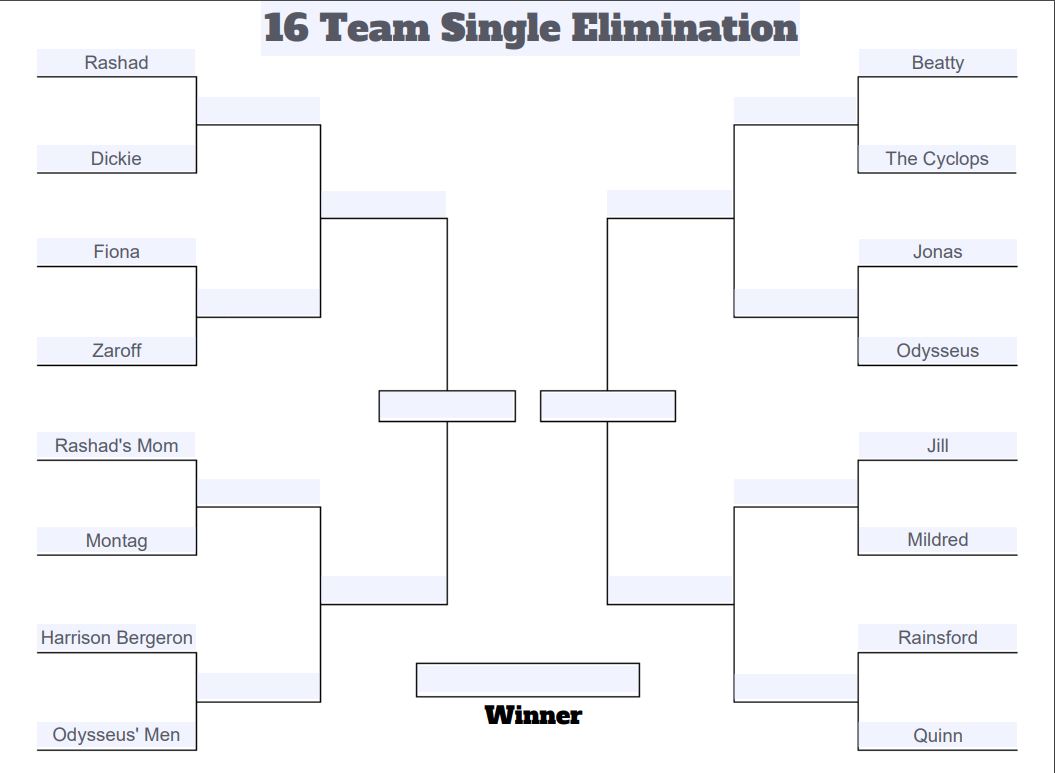
A completed 8th grade bracket for characters from 2019-2020 curriculum readings. Teachers would print a bracket for each student around EoG Review time and have students fill one out then debate and give text references that back up which character they feel more empathy towards and why. The bracket I filled can be found here.

Room Transformation – Speed Design

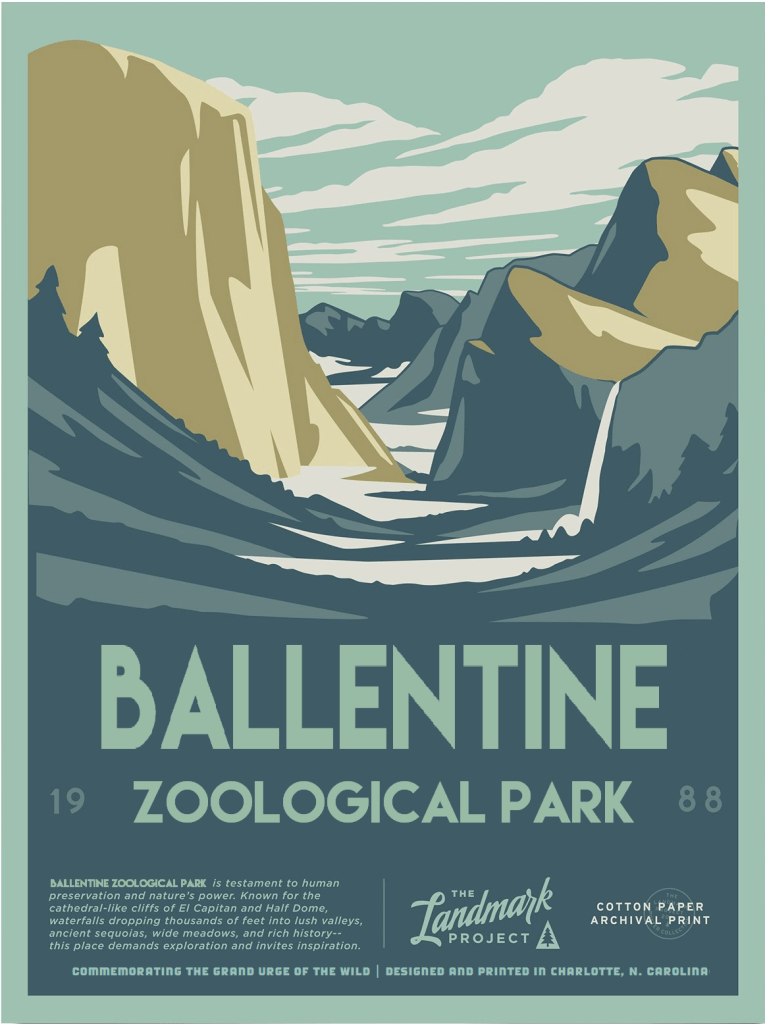
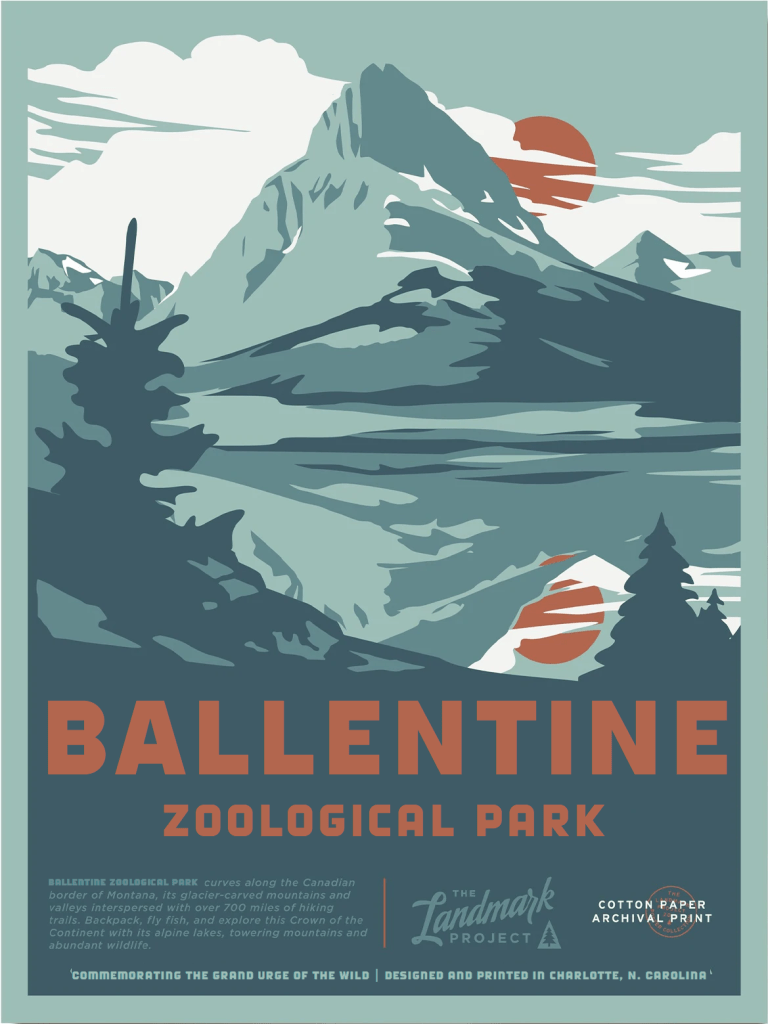
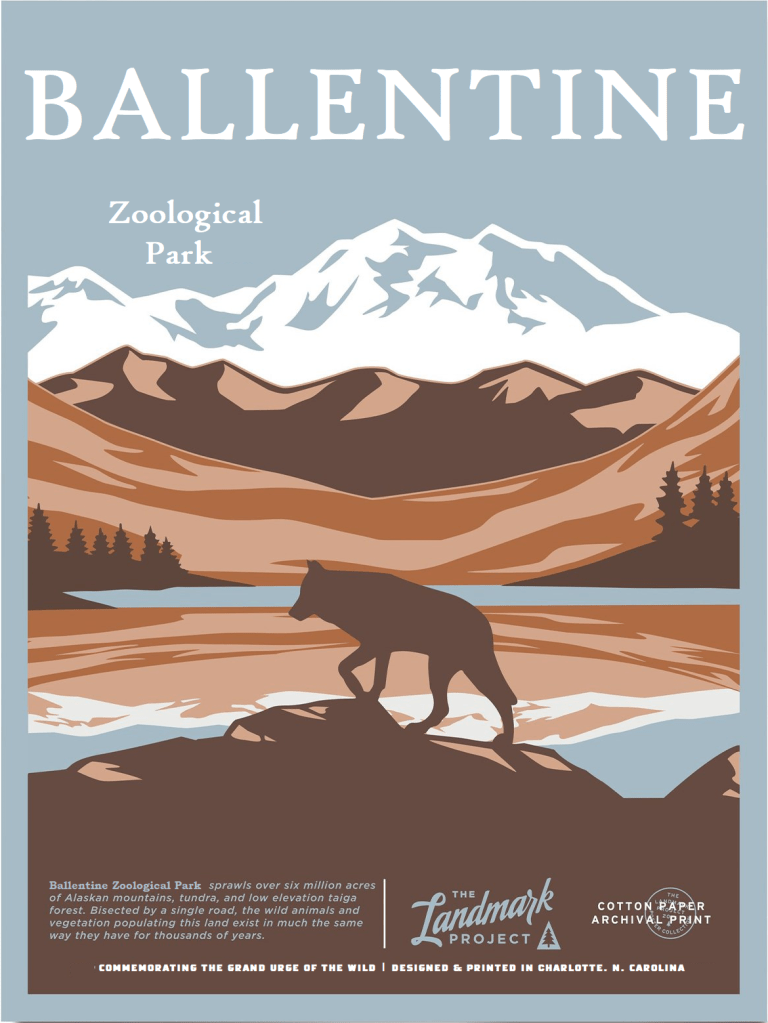
Mrs. Ballentine requested a poster redesign for what I imagine is a room transformation. The following are my redesigns of National Park posters. To create, I downloaded the images from their respective website, opened Paint, and deleted the original wording while trying to be as faithful to the type font as possible. I found this website to be very helpful in using image scanning software to tell me which fonts it most resembled, since I had the look of the font, but not a word processor piece I could copy and paste. Another tool that is very helpful when redesigning art for a classroom transformation is the Snipping Tool. It’s basically a croppable screenshot device.

Yosemite
Glacier National Park
Denali

None of these images are being recreated, sold, or used for any purpose other than to decorate her room once a year for a room transformation. To purchase the original posters (which are really cool on their own), please check out The Landmark Project.

Book Review – Edrenaline Rush

No Time To Read Your Review – Jump Me To The Stuff I Can Use!


After you’ve been in education for a while, you get a sort of super power to recognize which books will offer you new ideas, fresh perspectives, and concrete justifications for why this authors thoughts work so well. My current reading professional reading material is one such book; Edrenaline Rush by John Meehan.

John keeps his cover simple, with a brief description that has everything I want: “Game-Changing Student Engagement Inspired by Theme Parks, Mud Runs, and Escape Rooms”. This gives me a sense of practical applications of ideas I already used from a different perspective, while also indicating he has his own versions ready for consumption. The biggest takeaway I get from this book (and reading some of John’s own blog) is that as teachers, we should want students to be engaged as our number one priority. Engagement will lead to any and all other classroom success you are looking for, from discipline to happiness to knowledge acquisition. Get kids engaged and your educational wishes will all come true!

The books begins with a bit of pedagogy from John about why he does what he does and every chapter has a nice anecdotal lead in. It’s actually hard to get from one page to another without stopping to look up something he references (so you can use it yourself), jotting down an idea you have, or email a colleague with something that would be perfect for them. This is a wonderful problem to have as every time I picked it up to continue reading, I had to stop minutes later to begin working on a new inspiration for my classroom. In the first chapter alone about making your classroom a Theme Park, I have worked on five different ideas for my classroom or colleagues. The other chapters give similar engagement development thrills, but I’ll let you find that out for yourself.

The other key part of this book I wanted to mention was the sheer number of ideas and examples given. I know in my early career, before developing a list of engagement buddies and book appraisal powers, I read several pieces of ‘professional literature’ that put me to sleep/gave me no practical use/were mostly theoretical. With that as a base, I would have thought I’d never read again unless mandated in this profession but books like these are what I didn’t know I needed. This book has several dozen working examples that span curriculum and really get you interested in trying them out for yourself. You could take one example from this book every week and not have enough for the entire school year. If you have read The Wild Card, it’s similar in what the author wants you to get out of it in terms of creativity. Where The Wild Card uses a set of processes for creation, Edrenaline Rush, instead, uses a staggering amount of applicable material.

All in all, it’s a great read, quick, and the ideas you’ll get inspired to create cannot be described. I have linked a few examples of things I created upon reading the book, from recreations of templates to trying out new processes for other classes. I hope some of it will inspire you as it did me.

Edrenaline Rush by John Meehan
Developed Artifacts – Edrenaline Rush, Part 1

Chemistry Clue – Developed for use in 8th Grade Chemistry class for review. Made specifically at completion of Chemistry I review and students return from winter break, having forgotten everything. Original Template Here.


Hacking Your Class (Back to School, Day 1 Introduction to Class) – Developed for use in my personal PLTW class for Innovators and Makers (6th). The ‘game’ outlines all of the stuff students need to know, what I need to know, and get them engaged immediately. Original Template Here.


Patient Zero – Developed in tandem with Betsy Schneider for use in 7th grade Language Arts to pair with the novel study of the book Patient Zero. Another use of the Classroom Clue template from above. Work in progress.


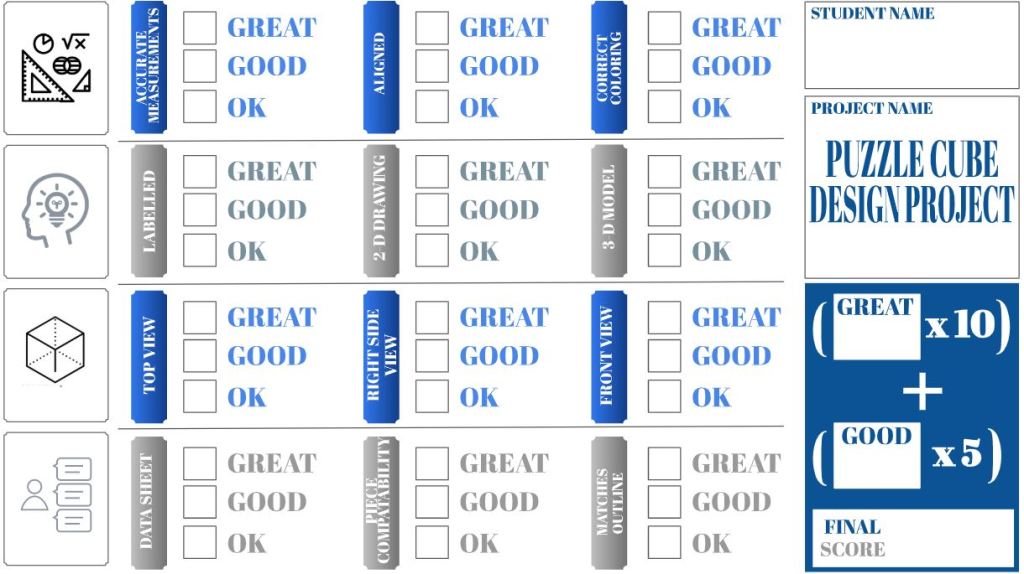
No Red Lights Rubric Puzzle Cube Project – Developed for my 8th grade PLTW Design and Modeling class. This was the rubric used for their final project, which was designing a solution for a furniture company to make puzzle cubes.

Design a site like this with WordPress.com
Get started